








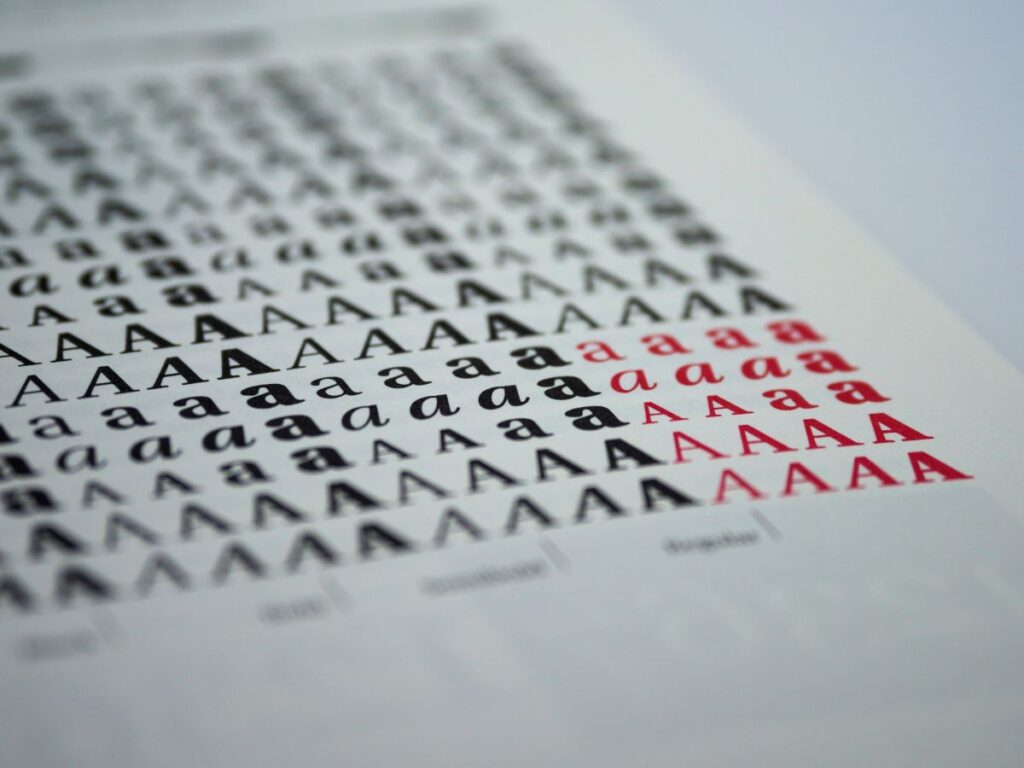
Adobe recently launched its interactive Font Finder Personality Quiz – designed to help people discover the typefaces that best reflect their personalities and communication styles.
While the campaign has been designed to playfully explore font identity, it does tap into something more important within the workplace and for those seeking new job roles: the way in which font choices influence perception, credibility and emotional response in emails, CVs, presentations and everyday professional communication.
To explore this further, Adobe has partnered with Jo-Ellen Grzyb – Psychotherapist, careers expert, and director at professional skills training company Impact Factory – in order to unpack some of the psychological and career implications of the fonts we use at work – often without realising it.






















“Fonts function like non-verbal communication,” Jo-Ellen explains.
“Before a single word is read, we are already starting to form judgments. Fonts we choose to use in a professional manner will act as a tone of voice or body language preference, and can subtly allude to whether the sender feels authoritative, approachable, creative, rigid or insecure.
“Companies spend millions of pounds on graphic designers to get the right font for brand identity and reinforcement, so there is a universal recognition of just how important fonts can be.
“It can even be political. In America, the US Government changed much of its font from Calibri (initiated during the Biden administrations to help people with visual impairments) back to Times New Roman because Calibri was considered ‘wasteful and informal’ and linked to DEI initiatives.”
Jo-Ellen highlights that in professional contexts, font choices can subtly affect outcomes such as:
- How confident or competent an email sender may appear.
- Whether a CV/Cover Letter to a hiring manager feels modern, outdated, assertive or cautious.
- How inclusive, warm or intimidating internal communications sent to colleagues feel.
- The level of trust and engagement generated in presentations.
“There’s a mismatch I see often in careers coaching,” says Grzyb.
“People carefully craft the content of their message but will then overlook the container. A friendly message in an overly formal font can feel cold, whereas a serious message in a playful font can undermine one’s credibility.
“The brain experiences this as cognitive dissonance, something feels ‘off’, even if we can’t articulate why.”
Drawing on psychological research into shape perception, Jo-Ellen explains that angular, rigid fonts can trigger alertness or formality, while rounded, softer fonts are more likely to be perceived as safe and collaborative. In high-pressure workplace environments, these signals can materially affect how messages land.
This is especially relevant in hiring and performance contexts:
“In CVs and cover letters, font choices can unconsciously signal conformity, confidence, creativity or risk-aversion. Recruiters may believe they’re being objective, but design cues absolutely influence perception, just like posture or eye contact would in an interview.”
Jo Ellen notes that there is no universally “correct” font, but context is everything.
“The most effective communication happens when content, intent and visual tone align. Fonts aren’t just decoration; they’re psychological cues that shape how we’re received.
“We never really know what’s happening at the ‘other end’ as it were. We can’t know if someone detests a particular font so sometimes it’s out of our control how someone will react. But like clothes, it’s always best to use a font that you feel comfortable with, that you feel represents you, and be consistent with it.”
While Adobe’s Font Finder Quiz is designed to be accessible and light-hearted, it reflects a deeper truth: design choices are another language we use at work to express identity, authority and belonging.
You can explore the Adobe Font Finder Personality Quiz here:
https://www.adobe.com/uk/special/font-personality-quiz/