









For large retailers with hundreds of branches, operational challenges often feel familiar. Rising crime, staff shortages, tight margins and ageing infrastructure dominate boardroom conversations. Yet while many organisations focus on headline issues, smaller structural inefficiencies quietly drain budgets year after year. One of the most overlooked is keyholding and access management.
The financial impact of traditional keyholding models is significant. Across large retail estates, annual costs can easily reach six figures before factoring in disruption caused by staff turnover, lost keys, emergency locksmith callouts or delayed alarm responses. As pressures mount, smarter access control is emerging as a practical way to unlock savings while strengthening security.
The hidden cost of staff turnover





















Low wages, long hours, limited career progression, customer abuse and the growing gap between pay and cost of living all contribute to instability at store level.
In 2022, research by retail charity Retail Trust found that one in five retail workers, and one in three employees at the UK’s biggest retailers, planned to leave the industry altogether1. Fast forward to 2025 and the problem has intensified. According to the State of the UK Hourly Workforce Report, 63 percent of hourly employees say they intend to leave their job within the next 12 months2.
High turnover has a direct and often underestimated impact on property and security costs. When employees leave suddenly, sometimes quitting on the spot, retailers face delays, operational disruption and the expense of replacing keys and locks. Multiply this across dozens or hundreds of stores and locksmith fees quickly escalate.
Traditional keyholding methods, including store managers retaining keys outside working hours, offer little flexibility in these situations. Once a physical key is unaccounted for, the safest option is often replacement across the board, including keys held by security services for outsourced alarm response.
Smarter access control, including the secure storage of keys at the point of need, removes this risk. By eliminating the need for individuals to carry keys off site, retailers can change access permissions instantly and remotely, as and when required.
Valuable stock and internal risk
Retailers have invested heavily to combat soaring theft. Security tags, locked cabinets, screens and on-site security guards have become common, particularly in supermarkets and high-value categories.
Yet not all theft is external. Internal shrinkage remains a persistent issue, especially for small, high value stock like mobile phones stored in back-of-house areas. While keys may be kept in a safe, access often relies on shared codes, informal handovers and no clear audit trail. During busy trading periods, keys are passed around to save time, leaving retailers exposed.
Smarter key management solutions can bridge the gap between traditional locks and full access control systems. For example, SentriGuard is used by some retailers to secure internal storage areas, providing full traceability of access and activity. For many organisations, this offers a cost-effective way to increase accountability without overhauling existing infrastructure or installing a fully digital, hard-wired access control system.
Alarm response and the true cost of crime
Retail crime does not stop during trading hours. When alarms are triggered overnight, speed matters. Delayed access can lead to greater damage, prolonged store closures and lost revenue, costs that extend far beyond the value of stolen or vandalised goods.
Access control plays a critical role in alarm response. Secure, intelligent keyholding allows security services or police officers to gain rapid access without forcing entry, reducing damage and downtime. For stores carrying high value stock, the ability to respond quickly can significantly limit consequential losses.
Beyond security: after-hours deliveries
The benefits of smarter access control increasingly extend beyond loss prevention. One growing use case is after-hours deliveries.
With secure keys stored at the point of need, delivery drivers can access stores outside trading hours to drop off goods without requiring shop staff to be present. This reduces overtime, simplifies logistics and improves accountability through detailed access logs and delivery notes completed using the key access app.
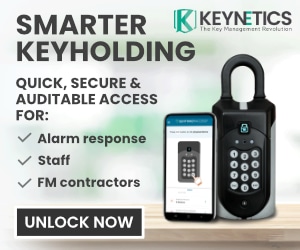
As Stuart Wheeler, Managing Director at Keynetics, explains, “One of our large retail clients originally purchased our smart key management systems for all their branches to improve security and alarm response.
“However, they soon began seeing additional benefits in other areas of operation, particularly after-hours deliveries. With keys available at the point of need at all times, drivers are able to gain access without delays while retailers retain full visibility of the process.”
Rethinking the cost of keyholding
The financial case is compelling. Average keyholding costs sit at around £400 per site per year. For a retailer with 250 locations, that equates to £100,000 annually purely for keyholding services.
By comparison, modern access control and key management systems can pay for themselves within a couple of years. Ongoing costs are largely limited to alarm callouts rather than fixed annual fees. Yet many retail property managers never reach this calculation. Faced with daily operational pressures, they are firefighting rather than forward planning.
A smarter way forward
Retailers will continue to face complex challenges, from workforce instability to rising crime. While no single solution can solve them all, smarter access control represents a practical and immediately actionable opportunity to reduce costs, improve security and streamline operations.
In an industry where margins are tight and savings are hard won, unlocking efficiencies hidden in plain sight may be one of the smartest moves retailers can make.