










For many facilities, estate and property managers, façade and glazing issues tend to enter the maintenance cycle quietly. A stain appears on an internal wall, or around a frame. A tenant reports a draught. Water ingress shows up intermittently during heavy rain.
The instinctive response is often pragmatic: call the window cleaners, ask them to “take a look”, perhaps apply a sealant, clean it down, and move on.






















It feels efficient. In practice, it introduces risk.
Across live projects, condition surveys, and remedial programmes, we see a consistent pattern. Building envelope defects are frequently being treated as cosmetic issues, and cleaning contractors are being asked to diagnose problems they are not equipped to understand.
The result is not just ineffective maintenance, but the gradual accumulation of technical, financial and operational or unmanaged risk.
At the centre of this issue is a fundamental misunderstanding: cleaning is not inspection, and access is not expertise.
When Maintenance Masks the Problem
Modern glazing and façade systems are complex assemblies. They rely on the interaction of seals, gaskets, fixings, drainage paths and structural tolerances to perform as intended. When something fails, the visible symptoms – staining, misting, leaks, are rarely the root cause.
Yet too often, those symptoms are treated at face value. Cleaning contractors, however competent, are not trained to diagnose failure mechanisms within glazing systems. When asked to intervene, the response is typically superficial: resealing visible joints, removing staining, or applying more aggressive cleaning methods. These actions may improve appearance temporarily, but they do little to address the underlying issue. In some cases, they actively conceal early warning signs that would otherwise trigger proper investigation.
Over time, defects progress unnoticed until they become disruptive, costly, or both. What begins as a minor seal failure can escalate into a far more significant intervention.
The Hidden Impact of Routine Maintenance Practices
Even widely accepted maintenance habits can introduce risk. One of the most common examples is the use of washing-up liquid as a glazing cleaner. We often assume it to be mild and safe, in fact many are chemically aggressive to many of the materials used in commercial glazing systems. Over time, repeated exposure degrades seals and gaskets, reducing their elasticity and compromising their ability to maintain a weather-tight barrier. The consequences are gradual but predictable: intermittent water ingress, increased air leakage, declining thermal performance, and eventual system failure.
Because this deterioration happens incrementally, it is rarely linked back to cleaning practices. Instead, failure is attributed to age or installation quality—masking a preventable cause.
The Role of Access — and Why It’s Often Misunderstood
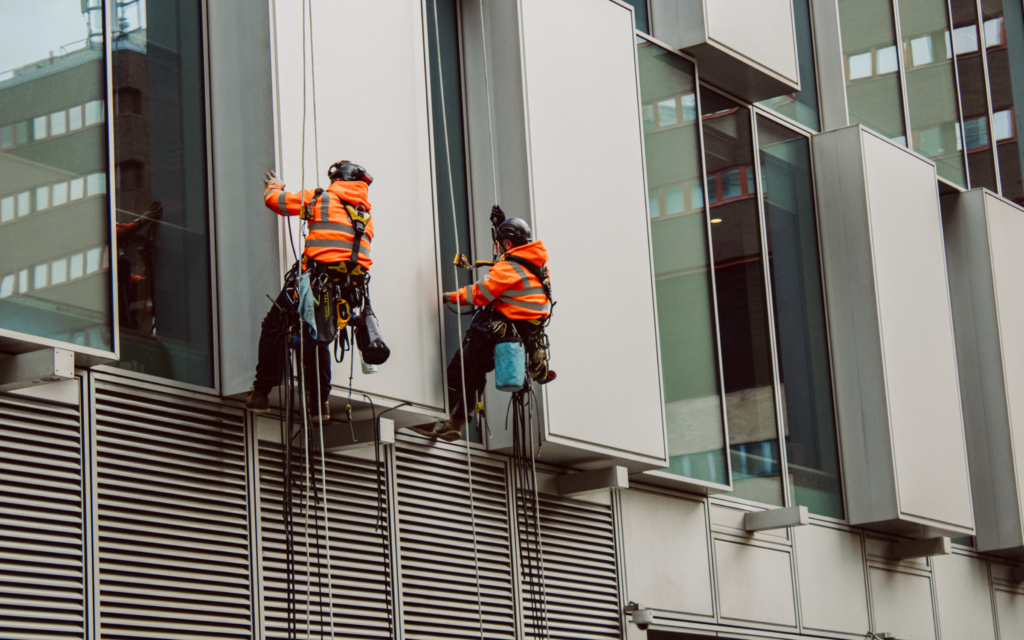
The method used to reach a façade determines the quality of information gathered. Ground-level observation or infrequent cradle access limits what can be seen and understood. In contrast, specialist rope access when delivered by a competent and façade aware contractor enables close up, systematic investigation. This includes:
· Detailed inspection of system components
· identify early-stage defects, using advanced defect mapping software
· test and verify failure mechanisms, using multiple detection methods
· carry out minor repairs in the same intervention
Inspections become more detailed, defects are logged systematically, and minor repairs can be carried out immediately. The result is not just better outcomes, but a more controlled and predictable maintenance cycle.
It is also more efficient. Rope access can be deployed quickly in a significantly less intrusive manner often outside of peak operational hours, reducing disruption in environments such as hotels, offices and academic buildings.
Yet despite these advantages, specialist access is still frequently introduced too late—after defects have already escalated.
The Cost of Getting It Wrong
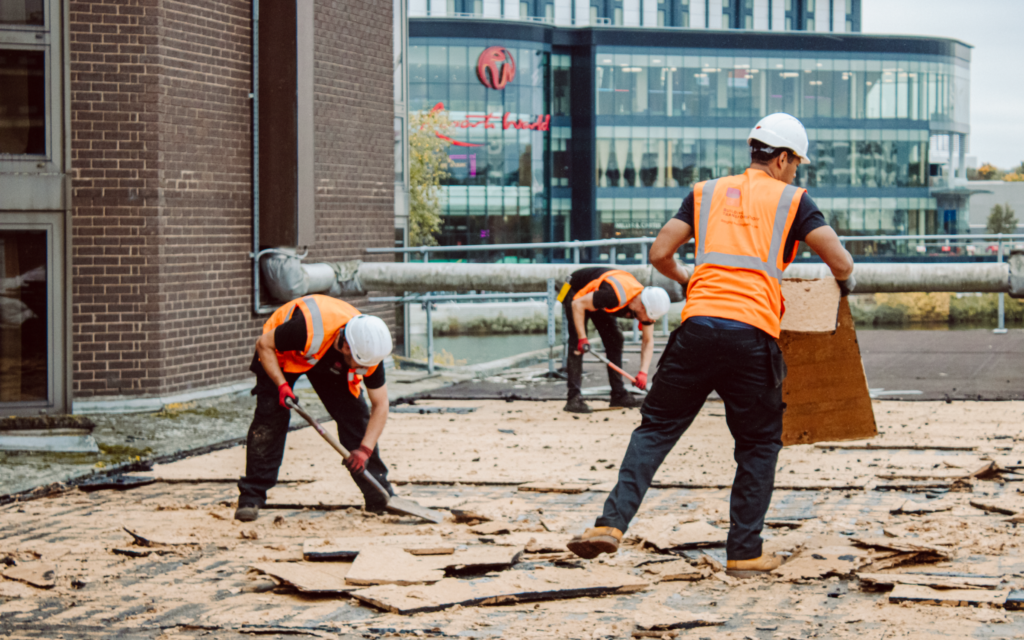
The risks associated with poor façade maintenance are rarely immediate, which is why they are often underestimated. But over time, they compound.
Undiagnosed defects allow moisture to penetrate the building fabric, damaging internal finishes and increasing the likelihood of more extensive repairs.
Temporary fixes create a false sense of resolution, delaying appropriate intervention while costs continue to rise. In parallel, the absence of structured inspection data limits the ability to plan and budget effectively.
There are wider implications too. Maintenance regimes that do not meet manufacturer requirements can invalidate warranties. Reactive works disrupt tenants and operations, particularly in revenue-sensitive environments. And visible deterioration—staining, failed units, inconsistent repairs—can affect both perception and asset value.
In many cases, by the time a problem is addressed properly, the scope has shifted from targeted repair to partial or full replacement.

Top 10 Risks of Getting Specialist Access Maintenance Wrong
1. Undiagnosed or Misdiagnosed Water Ingress
Root causes (failed seals, blocked drainage) remain unresolved, leading to progressive internal damage.
2. Accelerated Façade Deterioration
Incorrect interventions (e.g. inappropriate sealants or cleaning chemicals) degrade system components.
3. False Sense of Resolution
Cosmetic improvements mask underlying defects, delaying proper remediation.
4. Escalating Lifecycle Costs
Minor, repairable issues develop into full system replacement scenarios.
5. Warranty Invalidations
Lack of documented, specialist maintenance can void façade or curtain wall warranties.
6. Health & Safety Exposure
Inadequate access methods or unqualified contractors increase risk of incidents and liability.
7. Tenant Disruption & Revenue Impact
Reactive works lead to room closures, operational downtime, and complaints.
8. Compliance Failures
Poor façade performance can impact regulatory compliance (thermal, weatherproofing, safety).
9. Data Deficiency
No structured defect logging or condition tracking limits long-term asset planning.
10. Reputational Damage
Visible deterioration and recurring issues undermine asset quality and brand perception.

A More Informed Approach
None of this suggests that cleaning is unnecessary. On the contrary, it remains an important part of façade maintenance. But its role needs to be clearly defined within a broader strategy.
For facilities and estates teams, the challenge is not simply to fix problems, but to make defensible, informed decisions. Afterall, you shouldn’t have to approve repairs without clear evidence.
This requires a shift from reactive intervention to evidence-led maintenance.
Specialist access plays a central role in this process—not simply as a means of reaching the façade, but as a platform for detailed investigation and informed decision-making. Inspections become evidence-led, defects are tracked over time, and maintenance budgets are directed where they have the greatest impact.
An evidence led approach typically follows a clear sequence:
· define the problem and constraints
· access and inspect the relevant areas
· gather evidence and test where required
· produce a clear report with prioritised options
· deliver targeted repairs
· establish ongoing maintenance strategies
This is not about adding complexity. It is about removing uncertainty.

Choosing the Right Specialist Access Maintenance Provider
For facilities and asset managers, improving outcomes often starts with asking more rigorous questions of suppliers.
Not just whether they can access the façade, but whether they understand the systems they are working on. Not just what they will do, but how they will diagnose the problem, record findings, and inform future maintenance decisions. Not just how quickly they can respond, but how they will minimise disruption and protect long-term asset performance.
Top 10 Questions to Ask a Specialist Rope Access Maintenance Company
Capability & Expertise
1. How do you technically differentiate between cleaning, inspection, and repair scopes within your methodology?
· Look for evidence of diagnostic capability, not just execution.
· Expect clear segregation aligned with planned maintenance principles.
· Contractors operating in line with IRATA ICOP should demonstrate task-specific method statements, not blended scopes that risk uncontrolled works.
2. What demonstrable experience do you have with my façade system type (e.g. curtain walling, cladding, glazing)?
· Expect system-specific knowledge (e.g. pressure-equalised systems, gasket types, bracketry).
· General rope access capability is insufficient—façade systems require system-led maintenance aligned with manufacturer and CWCT guidance.
3. Do your technicians have recognised façade-specific training and certification, or are they solely IRATA-qualified for access only?
· Expect evidence of façade-specific competency beyond rope access certification.
· IRATA ICOP defines access competence, not trade competence—both are required for compliant maintenance delivery.
Inspection & Methodology
4. What does your inspection process include beyond visual assessment?
· Expect discussion of gaskets, fixings, drainage, interfaces.
· A purely visual survey does not meet good practice under British Standards Institution maintenance guidance.
5. How do you identify root causes rather than symptoms?
· Expect reference to water ingress pathways, thermal movement, installation defects.
· Effective maintenance must follow defect diagnosis principles; otherwise, repeat failures are inevitable.
6. What tools or systems do you use for defect logging and tracking?
· e.g. digital reporting, Photograph referencing, drop-marking, condition databases.
· Without structured data capture, there is no auditable maintenance history or asset management capability.
Maintenance Strategy
7. How do you structure planned preventative maintenance (PPM)?
· Annual cycles, phased façade coverage, integration with cleaning.
· Reactive-only approaches conflict with established building maintenance standards and increase long-term cost.
8. Can inspection, minor repairs, and cleaning be combined efficiently in one programme?
· Expect efficient task bundling to reduce repeated access risk
· In line with IRATA ICOP hierarchy, minimising repeated rope access cycles reduces exposure and improves efficiency.
Risk & Compliance
9. How do you ensure compliance with manufacturer warranties and maintenance requirements?
· In line with IRATA ICOP hierarchy, minimising repeated rope access cycles reduces exposure and improves efficiency
· Non-compliant interventions can invalidate warranties and introduce liability.
10. How do you minimise disruption to tenants and operations during works?
· Expect controls such as carefully planned and documented exclusion zones, drop prevention, phased works, and regular stakeholder communication.
· IRATA ICOP requires robust risk assessment and control measures, particularly in occupied environments.
These distinctions matter. Because in façade maintenance, the difference between treating a symptom and resolving a defect is rarely visible in the short term—but it is always evident in the long term.
The Key Takeaway
For facilities and asset managers, the distinction is clear:
Cleaning maintains appearance. Specialist access maintenance protects asset performance.
Where this distinction is not made:
· misallocated budgets
· unmanaged risk
· assets deteriorate earlier than they should
A competent rope access partner does more than reach the façade. They provide clarity, evidence and control over how the asset is maintained.
That is the difference between reacting to problems and managing them.

















Why One Triaxial Test Result Is Never Enough