








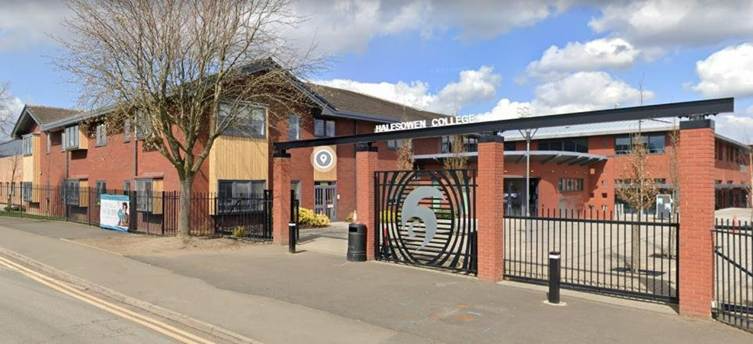
The further education college has installed smart lighting as part of its latest environmental initiative, making up to 85% energy savings compared to the previous system. Halesowen has the ambitious target of reducing carbon emissions by 50% by 2032 and 75% by 2037 (compared to 2019 usage).
Supporting the national drive to make Britain a clean energy superpower, Halesowen College has already implemented a number of projects. This includes recycle collection points at all campuses, electric vehicle charge points, and a dedicated coach service to students.
To upgrade the lighting system, the college partnered with Uni Smart Solutions, a managed service provider for sustainable buildings, and Siemens Financial Services (SFS), a specialist finance provider. Innovate UK, the UK ‘innovation agency’, introduced Uni Smart to Halesowen; and SFS is Uni Smart’s exclusive financing partner.






















If buildings could talk
According to the World Green Building Council, buildings represent 39% of global energy-related emissions.[i] Smart technologies can significantly reduce this impact. Lighting alone contributes up to 25% of energy usage, according to Uni Smart – and HVAC (Heating, Ventilation, and Air Conditioning) systems – is responsible for up to 60%.
For new building projects, Uni Smart starts by gathering consumption data. Chris Goff, Managing Director, Uni Smart,likes to ask, “If buildings could talk, what would they say? Are they too warm, too cold, too full, or draining too much energy?”
Next, Uni Smart recommends solutions from its IoT product suite, EcoPulse. Traditional, fluorescent and LED lighting uses more energy than state-of-the-art smart lighting controls; smart lighting is up to 75% more energy-efficient than LED. This is why lighting is often addressed first, ensuring energy efficient bulbs are used, lights are switched off in unoccupied areas, and that failed lighting is quickly detected and fixed.
Attention then shifts to air temperature and occupancy, ensuring each area of the building is controlled and used efficiently. Customers have full access to data from installed devices; Uni Smart also provides regular reports to estate managers, removing the burden of analysis.
Investing to save
The challenge is not to convince building owners and managers of the benefits of smart technology, but to encourage capital-strapped organisations to invest. With over two decades of experience using asset finance, Uni Smart’s Chris Goff starts this conversation with customers early on. Energy efficiency projects typically pay for themselves over time; smart finance solutions can be structured to align with these savings.
Uni Smart’s service doesn’t end with the installation. The company also maintains installed systems to prevent degradation, protect customers’ investment and ensure ongoing savings.
| Chris Goff, Managing Director, Uni Smart, said: “Asset Finance is not just a way of buying things; it can protect the assets and make sure they’re performing for the term of the agreement. In our case, we also make sure all savings are retained by our customers – we don’t expect a share.“Helping customers to understand what they can achieve through financing, and helping to make a business case, is part of our service. This is especially important in education where there are specific rules about access to finance.” |
SFS is Uni Smart’s sole finance partner, thanks to the financier’s expertise in smart building technology in the field, and its commitment to sustainability-focused projects. For Halesowen’s lighting project, SFS provided a master lease facility. The college can draw down for each installation, rather than applying for a new lease each time.
Corinne Youren, Director of Estates at Halesowen College, said, “We have used financing before, for assets such as IT equipment, but this was our first time partnering with a financier for smart building technologies. The master lease solution meant we simply had one structure, and one set of terms and conditions”.
Switching up lighting
Uni Smart’s smart lighting automatically turns off when not needed, and adjusts to sunlight levels to maximise natural light. Centralised control allows facility managers to schedule lighting ‘scenes’, track usage, and resolve issues remotely, cutting maintenance costs. Each light includes a built-in energy meter.
The initial project (covering three of thirteen buildings) achieved up to 85% energy savings versus the old system, and a net 20% saving in operational costs. Halesowen’s Corinne Youren said, “Thanks to these economies and the efficiency of the finance solution, Uni Smart’s Building Managed Service will be the standard for our sustainability and building refurbishment programme moving forwards.”
[i] https://worldgbc.org/climate-action/embodied-carbon/#:~:text=Buildings%20are%20currently%20responsible%20for,11%25%20from%20materials%20and%20construction