








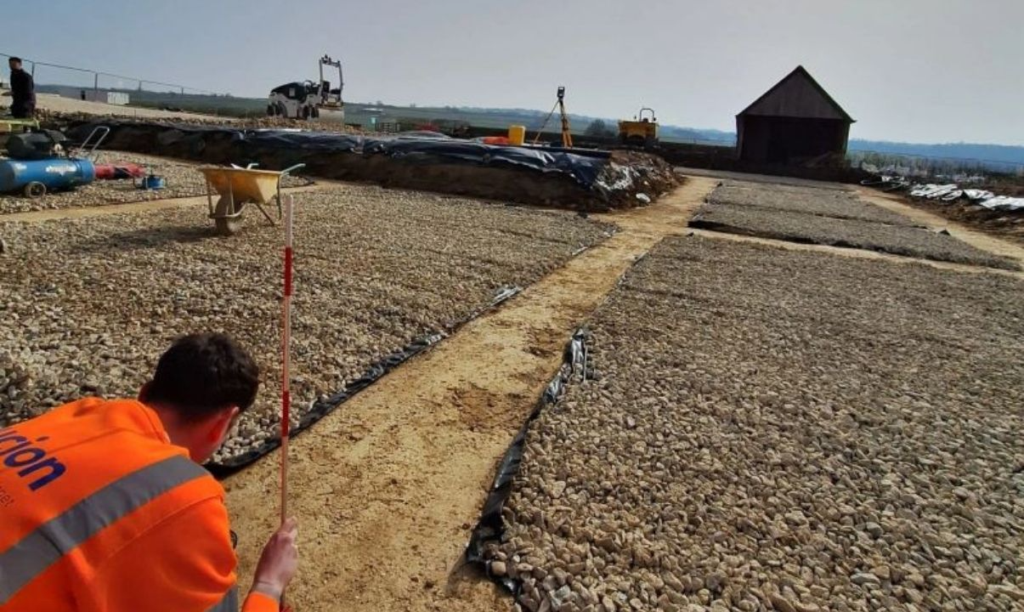
Lucion advises housebuilders that accurate, joined-up site data must come before decisions on heating systems, solar PV and fabric upgrades.
Housebuilders know the deadline. They know the standard. But are they thinking early enough about the data that will decide whether their schemes can actually move in time?
That is the advice from Lucion, which is urging developers not to overlook the most important first step in Future Homes Standard readiness. Getting accurate, joined-up site data in place early enough to inform planning, design and Building Control decisions.






















With the sector now well into a 12-month transition period, housebuilders have around 10 months left before the new regulations come into force on 24th March 2027.
While much of the industry conversation has focused on heat pumps, solar panels, fabric performance and expected cost increases, Lucion says the starting point for many housebuilders should come much earlier in the process of understanding the site.
While much of the industry conversation has focused on heat pumps, solar panels, fabric performance and expected cost increases, Lucion says the starting point for many housebuilders should come much earlier in the process: understanding the site.
Without accurate survey data, environmental insight and coordinated technical due diligence, developers risk delays, redesigns and missed transition deadlines before they even reach decisions around heating systems, renewable energy or building specifications.
The Future Homes Standard will require new homes to deliver significantly lower carbon emissions, with low-carbon heating, on-site renewable electricity generation and stronger fabric performance becoming central to future compliance.
The notional building specification is expected to be based around an air source heat pump, making gas boilers commercially unviable for many new-build schemes, while most new homes will also be required to include solar PV equivalent to 40% of each dwelling’s ground floor area.
Fabric performance will also tighten, with greater emphasis on glazing performance, air permeability and improved building efficiency. Under the new standard, the target air permeability score is reduced from 5.0 to 4.0, adding another technical consideration for development teams already managing more complex design requirements.
However, Lucion says the ability to move schemes forward quickly will depend heavily on whether developers have the right technical information in place from the outset.
Topographical surveys, utility detection, drainage information, ecological assessments, ground investigations, flood risk, arboricultural assessments, and Biodiversity Net Gain considerations can all influence layout, design, planning conditions and Building Control readiness.
If these workstreams are delayed, incomplete or managed in isolation, the impact can quickly spread across a development programme.
Tom Chapman, Business Development Manager at Lucion Survey Ltd, said: “The industry is understandably focused on heat pumps, solar panels and fabric upgrades, but those decisions come later. The first step must be understanding the site itself.”
“We’re already seeing developers accelerate their pre-commencement work. The transitional arrangements are generous if you act now, but once March 2027 passes, housebuilders will be designing to a completely different standard, with longer lead times, higher costs and more complex supply chain management.”
“The projects that stall are almost always the ones where technical work happens in silos. An ecological issue can affect the site layout, which impacts the drainage design, which changes the levels. Suddenly, you are months behind, and your Building Control submission date has slipped past the transitional deadline.”
The government has confirmed that the new regulations will come into force on 24th March 2027. Building Control applications submitted before this date can continue under the current 2021 standards, provided construction starts within 12 months.
For larger sites, this creates both an opportunity and a challenge. Transitional arrangements can apply on a building-by-building basis, meaning developers may be able to phase applications strategically. However, Lucion says this will only be effective if technical constraints are identified and resolved early enough to prevent submission dates from slipping.
The transition could also affect unstarted buildings currently working to older standards, including plots under the 2013 version of Part L, which will need to be uplifted to meet the new requirements if they fall outside the transitional arrangements.
The government has estimated that the Future Homes Standard could increase build costs by around £4,350 per dwelling, driven by heat pump installations, solar panel requirements, improved fabric standards and additional design work. Lucion says these costs could be compounded further if developers face avoidable programme delays caused by poor or fragmented site information.
The deadline also comes against a backdrop of wider uncertainty for development teams. The Home Energy Model, which will replace the Standard Assessment Procedure, is not expected to be available as an approved methodology until at least June 2026, with a 24-month dual running period expected alongside SAP 10.3.
Lucion says this makes it even more important for housebuilders to take control of the areas they can influence now, including the quality, accuracy and coordination of site data.
Tom added: “There is a real risk that some housebuilders treat the Future Homes Standard as a compliance issue that starts with the building specification. In reality, readiness starts much earlier.”
“Before you can design confidently for the standard, or accelerate a scheme through the transition period, you need to know what you are building on, what constraints exist, and how those constraints affect the wider development.”
“That is where early, coordinated technical due diligence becomes critical. It is not just about collecting survey data. It is about making sure that data is accurate, connected and usable across the whole project team.”
As demand increases for heat pump installers, solar PV specialists, enhanced insulation and high-performance glazing, Lucion is also warning that delays at the early technical stage could make wider supply chain pressures harder to manage. Grid connection queues, installer availability and specification changes are all likely to place additional pressure on development programmes as the deadline approaches.
According to Lucion, the housebuilders best placed to manage the Future Homes Standard transition will be those that bring technical teams together earlier, use site data to identify constraints quickly, and avoid treating surveys, environmental assessments and design inputs as separate workstreams.
Tom concluded: “Housebuilders should not wait until the specification stage to think about Future Homes Standard readiness. Before the heat pumps, before the solar panels and before the fabric upgrades, get the site data right. That is what will help schemes move faster, reduce avoidable delays and give developers a much clearer route through the transition period.”