







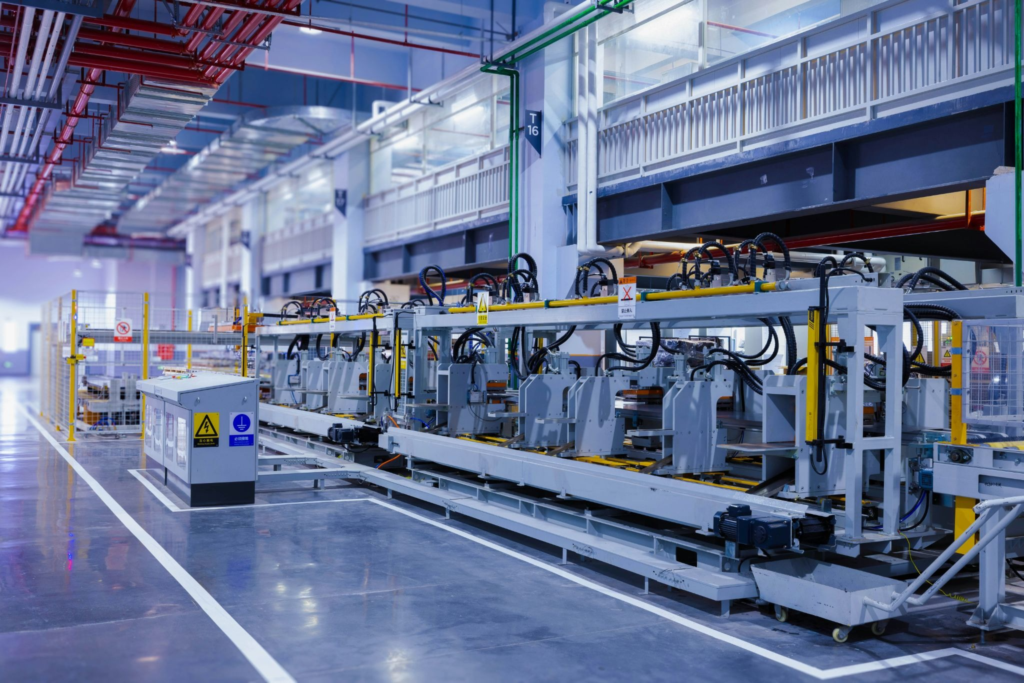
A recent study revealed that UK manufacturers lose up to £736 million a week on unplanned downtime, spotlighting the significant challenges facing the industrial sector.* With manufacturing organisations operating in high-pressure environments where precision matters, expectations remain high and operational disruption can lead to serious damage.
Anoop Bhasin, expert at SFG20, the industry standard for industrial facilities management, has identified the top facilities management challenges industrial and manufacturing organisations are grappling with right now, and what FM teams can do to stay ahead of the risk, improve compliance and save time and money.
“Maintenance teams face significant pressures in industrial settings. These estates typically combine day-to-day operations with a wide range of building and support assets, all while working to tight production schedules and high quality expectations. Within this environment, maintenance is far more than a background function; it directly safeguards the operational safety, control, continuity and compliance of the estate and those working in it.






















“Few sectors face the same maintenance challenges as industrial and manufacturing environments”
- Downtime is commercially unacceptable
Operational downtime carries significant cost, and when critical building services or site infrastructure fail, the consequences extend far beyond the asset itself. Problems with HVAC, power, water services, access systems, control or fire systems can quickly disrupt wider operations. This downtime can snowball into missed production requirements, excess scrap, overtime, shipping issues and contractual penalties from clients.
- Demanding industrial estates have a higher dependency on utilities
Industrial sites rely on utilities to a far greater extent than most sectors, including compressed air, steam, chilled water, process ventilation and dust extraction. These systems must also perform in challenging conditions involving dust, heat, vibration and corrosive atmospheres, placing additional strain on both individual assets and overall maintenance strategies.
- Precision-driven environments leave no room for vague maintenance
Manufacturing and engineering environments work to high standards of precision, repeatability and control, and that expectation extends into facilities management. Maintenance cannot be vague, inconsistent or poorly evidenced. It needs to be structured, appropriate and dependable, which means documentation and consistency matter.
- Outsourced maintenance still leaves accountability with the owner-occupier
Many industrial organisations outsource maintenance delivery, but accountability for building safety and statutory responsibilities remains with the owner-occupier. That creates a governance challenge: organisations must be confident that outsourced work is carried out correctly, remains current and can be evidenced if scrutinised by auditors, insurers, HSE or internal governance, particularly where statutory tasks and contractor management are involved.
- Inherited sites and legacy maintenance regimes create inconsistent standards
Different sites, teams or service partners may work to different assumptions, frequencies or task scopes, especially where sites have been acquired or inherited. Combined with older plant rooms, legacy fire systems, ad hoc schedule additions and duplicated tasks that have never been fully reviewed, this variation reduces control, increases risk and makes it harder to demonstrate a consistent standard.
“For many organisations in this sector, the challenge is not simply whether maintenance is being carried out, but whether it is being carried out in the right way, at the right frequency and by the right people, and whether that approach can be clearly evidenced.
“Industrial maintenance is not just about completing tasks. In high-precision environments, it is about protecting uptime, demonstrating control and being able to evidence that maintenance is current, compliant and fit for purpose.
“To start taking control of these challenges, join the many industrial organisations in taking their first steps to improving compliance, saving money, minimising downtime and staying audit ready by downloading SFG20’s FM checklist here.