







Facilities managers have a legal and moral responsibility to ensure that contractors carrying out work at height are competent to do so safely. While many organisations routinely check that operatives hold a CSCS card before arriving on site, it’s equally important to understand what that card actually represents.
For those installing temporary safety systems such as safety netting, edge protection, stair towers and platform decking, a standard construction card is not enough. These specialist activities require additional training, assessment and practical competence.
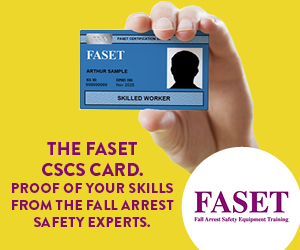
That’s where the FASET CSCS Card plays an important role.






















Developed through a partnership between FASET (Fall Arrest Safety Equipment Training) and the Construction Skills Certification Scheme (CSCS), the FASET Card provides recognised evidence that an operative has achieved the specialist qualifications required to install temporary safety systems safely and competently.
For facilities managers, principal contractors and duty holders, this offers valuable reassurance. Rather than relying solely on company assurances or generic competence claims, the FASET Card provides an independently verified way of confirming that operatives have the appropriate skills and training for this highly specialised work.
The card is issued digitally through the Vircarda platform and can be verified instantly using the CSCS Smart Check system. This enables site managers to confirm qualifications quickly and securely while reducing the risk of fraudulent or outdated credentials. Digital cards also ensure that qualification updates and expiry dates remain current without the need to issue replacement cards.
As building maintenance, refurbishment and inspection programmes continue throughout the year, ensuring contractor competence should remain a key part of every procurement and mobilisation process. Asking the right questions before work begins can help reduce risk, improve compliance and demonstrate that appropriate due diligence has been exercised.
The FASET Card forms an important part of that process, giving employers and clients confidence that those responsible for installing temporary safety systems have met recognised industry standards.
In an industry where competence is increasingly under the spotlight, verifying specialist qualifications isn’t simply good practice—it’s an essential step in protecting people, projects and reputations.